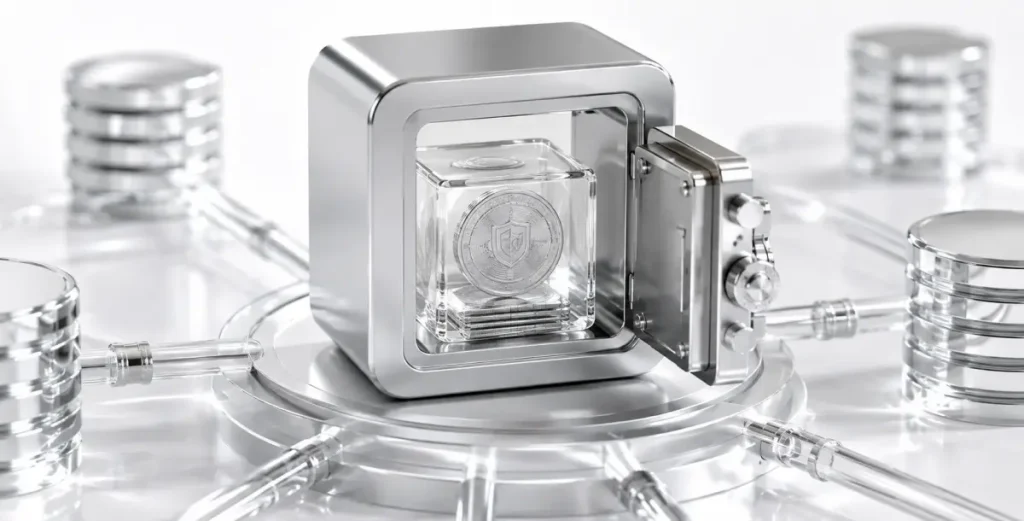


In the world of digital asset management, your choice of wallet architecture directly dictates the tension between security and user experience. As the market matures, a more nuanced solution has emerged between the two traditional extremes of “Cold” and “Hot” storage: the Warm Wallet.
A Warm Wallet occupies the strategic middle ground—it is neither completely offline nor perpetually exposed. This guide explores the core logic, operational advantages, and institutional applications of the warm wallet as a vital tool in the 2026 digital economy.
Defining the Warm Wallet
A Warm Wallet is a hybrid storage solution that bridges the gap between the absolute security of Cold Wallets and the high-speed accessibility of Hot Wallets.
- Hot Wallet: Always online; optimized for instant transactions but highly vulnerable to network-based attacks.
- Cold Wallet: Entirely offline; offering maximum security but significant operational friction.
- Warm Wallet: Partially online and gated by specific security protocols. It uses a layered architecture to balance liquidity with protection.
Think of it as a tiered system where high-frequency operational funds remain accessible, while larger reserves are shielded behind additional verification layers.
Core Operational Mechanics
The design philosophy of a warm wallet is centered on Tiered Security Management. Key mechanisms include:
1. Hierarchical Storage Architecture
Warm wallets categorize assets into distinct risk layers:
- The Hot Layer: For high-velocity, day-to-day transactions.
- The Warm Layer: For mid-frequency operations, protected by secondary authorization.
- The Cold Layer: For long-term capital preservation, essentially offline.
2. Dynamic Liquidity Rebalancing
Sophisticated warm wallet systems feature automated or semi-automated fund scheduling. If the “Hot” layer drops below a certain threshold, it is replenished from the “Warm” layer. Conversely, excess funds in the hot layer are automatically swept back to a more secure tier to minimize exposure.
3. Integrated Risk Controls
Unlike a standard hot wallet, a warm wallet is governed by strict logic:
- Multi-Sig/Threshold Authorization: Requiring multiple parties to sign off on movements.
- Heuristic Monitoring: Setting limits on transaction volume, frequency, and destination addresses.
- Deferred Execution: High-value transfers may be subject to a “cooling-off” period to allow for manual interception if an anomaly is detected.
Strategic Advantages: Why Go “Warm”?
The Equilibrium of Security and Speed
The primary value of a warm wallet is that it does not sacrifice the user experience for the sake of safety. It eliminates the manual drudgery of accessing deep-freeze cold storage while removing the “single point of failure” risks associated with hot wallets.
Mitigating Single-Point Vulnerability
As funds are partitioned, a compromise in the operational layer does not grant access to the entire treasury. This makes it the ideal solution for scalable capital management, particularly for:
- Exchanges: Providing instant user withdrawals while keeping the bulk of the platform’s reserves secure.
- Corporate Treasuries: Enabling multi-person approval workflows and auditable logs for compliance.
- Institutional Investors: Managing large-cap portfolios that require periodic rebalancing without exposing the full principal to the internet.
Warm Wallets and MPC: A Synergistic Approach
A warm wallet defines the management architecture, while MPC (Multi-Party Computation) defines the cryptographic security. When combined, they offer a formidable defense:
- The warm wallet structure handles the layered fund movement.
- MPC ensures that the private keys themselves never exist in one piece, even during the signing of a “warm” transaction.
This combination allows for granular permissioning and high resistance against both external hacks and internal collusion.
Building a Balanced Strategy for 2026
As we look forward, warm wallets are becoming more intelligent. The next generation of these systems will feature AI-Driven Risk Engines that adjust withdrawal limits and security thresholds in real-time based on market volatility or network congestion.
Furthermore, as the industry shifts toward Account Abstraction, warm wallets will likely integrate directly with biometric identity systems, allowing for a seamless “Keyless” experience that maintains institutional-grade protection.
The warm wallet is no longer just a compromise; it is an essential pillar of modern financial infrastructure. By utilizing tiered storage, dynamic scheduling, and multi-layered verification, it provides a resilient framework for anyone who needs to move assets without moving them into harm’s way.
For the forward-thinking enterprise or high-net-worth individual, the warm wallet is the most pragmatic path toward liquidity with integrity. It ensures that your assets are ready when you need them, but out of reach for those who don’t.