
Securing Your Digital Assets: The Ultimate Guide to Hardware Wallets and Non-Custodial MPC
As digital asset management becomes increasingly critical, securing private keys and retaining full control over capital is a fundamental challenge for every holder. Hardware wallets (cold storage) and non-custodial Multi-Party Computation (MPC) wallets are currently the two most prominent self-custody options on the market. This guide breaks down how both architectures work, evaluates their operational […]
Hardware Wallets and Non-Custodial MPC: The Dual Pillars of Digital Asset Security

As the digital asset market expands, capital preservation has become a top priority for individual investors, Web3 enterprises, and institutional participants alike. Whether holding assets for the long term or actively interacting with decentralized finance (DeFi), non-fungible tokens (NFTs), and cross-chain protocols, wallet security serves as the baseline for all operations. Among the various protective […]
Non-Custodial MPC Wallets: Defining the New Standard in Decentralized Asset Management

Capital security and absolute control remain the most critical priorities in the digital asset ecosystem. As blockchain architecture matures, the non-custodial Multi-Party Computation (MPC) wallet has emerged as the benchmark framework for institutional and retail asset management. This setup combines the self-sovereign control of traditional cold or hot non-custodial structures with the advanced, decentralized protection […]
The Cryptographic Bedrock of Web3: Demystifying Public Key Infrastructure and Decentralized Identity
As digital asset ecosystems expand into mainstream enterprise operations, concepts like tokenization, smart contract interactions, and decentralized identity are becoming fundamental to corporate strategy. At the core of these technological advancements lies a critical cryptographic element that is frequently referenced but often misunderstood: the Public Key. Inexperienced market participants routinely confuse public keys with wallet […]
Integrating Cold Storage and Web3 Wallets into an Enterprise Digital Asset Framework
As institutional participation within the blockchain ecosystem scales, the infrastructure used to manage digital assets is undergoing critical standardization. Among the core components of this operational landscape, two distinct wallet architectures dominate executive discussion: Cold Wallets and Web3 Wallets. Historically, these solutions have been framed as an either-or choice. In an institutional context, however, cold […]
The Evolution of Digital Asset Infrastructure: Aligning Cold Storage with Web3 Connectivity

As the blockchain ecosystem matures, digital assets are transitioning from isolated cryptographic novelties into standard infrastructure for the broader commercial and internet economy. From on-chain settlement layers and Decentralized Identity (DID) frameworks to Decentralized Applications (dApps) and Web3 social graphs, the digital wallet is no longer a simple application—it has become the primary portal to […]
Strategic Asset Management: Navigating Crypto Custody and Self-Custody Frameworks

For as long as digital assets have existed, a singular axiom has governed the ecosystem: “not your keys, not your coins.” It was a foundational commandment born of necessity, an unyielding rule of survival in a lawless digital frontier. Yet, as the cryptocurrency landscape matures, this absolute truth is facing a nuanced re-examination. The market […]
Breaking Data Silos Safely: How MPC Technology Drives Collaborative Analytics

In today’s hyper-digital economy, data is frequently called the “new oil.” However, much like petroleum, raw data is practically useless until it is refined, transported, and put to work. This reality introduces a sharp commercial paradox: How can modern enterprises extract the operational value of combined data sets without compromising customer privacy or giving up […]
Data Collaboration Without Data Sharing: The Real Mechanics of Multi-Party Computation
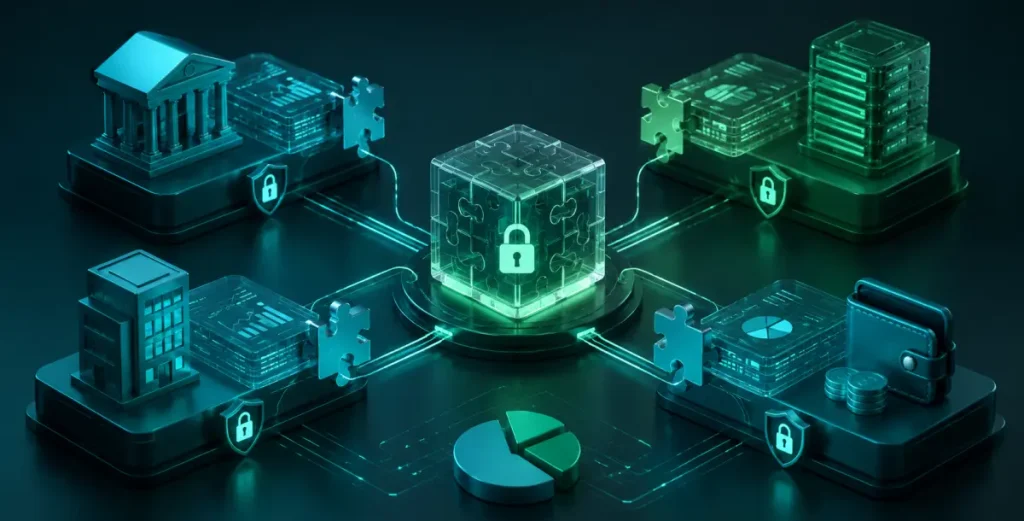
In today’s enterprise landscape, data has become an organization’s most valuable asset. However, as the value of data grows, so do the liabilities: data breaches, compliance penalties, and advanced cyber attacks are now top-tier corporate risks. This exposure is driving global interest in Multi-Party Computation (MPC) technology. MPC is an advanced cryptographic framework that allows […]
A Deep Dive into Non-Custodial MPC Wallets: Redefining Digital Asset Ownership and Security

As the digital asset and Web3 ecosystems scale, wallets serve as the primary gateway for asset storage and network interaction. As a result, security frameworks and asset ownership models remain the most critical decisions for any user or organization. Traditional custodial wallets hand full asset management rights to a third-party platform. While convenient, this model […]