

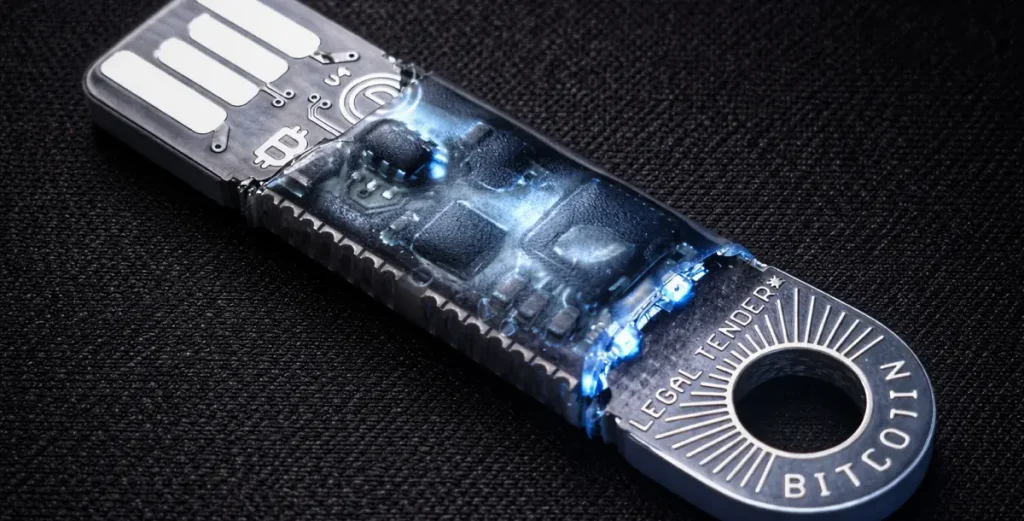
In the digital asset ecosystem, security is the ultimate operational bottleneck. As portfolios scale, the threat surface expands to include sophisticated state-level actors, targeted social engineering, and zero-day exploits. For institutional players and high-net-worth holders, implementing a robust Cold Wallet 及 Private Key framework is the only viable path to long-term capital preservation.
This guide analyzes the technical logic of cold storage, air-gapped signing protocols, and the industry-standard management strategies required to secure digital holdings.
Defining the Cold Wallet
A Cold Wallet is a custody solution where the private key is generated and stored in a persistently offline environment. By maintaining a total “air-gap” between the key and the internet, cold wallets neutralize the primary vector for asset theft: remote network exfiltration.
Core Technical Attributes:
- Offline Key Residency: The key is never exposed to a networked environment.
- Network Isolation: Zero physical or wireless connectivity to the web.
- Attack Surface Minimization: Eliminates risks from software vulnerabilities, phishing, and remote malware.
- Operational Friction: Optimized for high-security vaulting rather than high-frequency liquidity.
In a professional asset framework, cold wallets function as the “Vault,” while hot wallets act as the “Transactional Layer.”
Private Keys: The Single Point of Control
A private key is the ultimate instrument of authorization. It is a 256-bit cryptographic string that serves as the singular proof of control over a blockchain address.
- Asset Sovereignty: In decentralized systems, possession of the private key is synonymous with ownership of the underlying assets.
- Signing Authority: Every transaction requires a cryptographic signature generated by the private key to be validated by the network.
- Absolute Finality: Unlike traditional banking, there is no “undo” button. If a private key is compromised, the assets are effectively lost.
The Offline Signing Protocol
The security of a cold wallet is derived from its “Cold-Sign” workflow, which ensures the private key never touches a networked device during a transaction.
- Construction: The transaction is built on an internet-connected (hot) device.
- Transfer: The unsigned data is moved to the cold device via QR codes, NFC, or a hardware interface.
- Authorization: The cold wallet signs the transaction offline.
- Broadcast: Only the signed transaction data is returned to the hot device for network propagation.
Asset Storage Performance Matrix
| Feature | Cold Wallet | Hot Wallet |
| Key Environment | Air-gapped (Offline) | Persistent (Online) |
| Attack Surface | Physical only | Network-wide |
| Liquidity/Speed | Low (Manual steps) | High (Instant) |
| Ideal Use Case | Reserve Assets | Operational Capital |
| Security Posture | Institutional Grade | Hot/Liquidity Tier |
Core Cold Storage Frameworks
- Hardware Wallets: Purpose-built devices utilizing Secure Element (SE) chips. These represent the industry benchmark for balancing user experience with high-level security, offering audited, tamper-resistant environments for key residency.
- Air-Gapped Computing: The use of a dedicated, permanently offline workstation. While this offers maximum customization for advanced users, it demands rigorous technical discipline to mitigate “bridge” infections via removable media.
- Metal/Physical Backups: Engraving seed phrases onto stainless steel or titanium. This is the gold standard for disaster recovery, ensuring that the core backup remains resilient against fire, flooding, and long-term physical degradation.
Critical Vulnerabilities & Threat Vectors
Even the most robust cold storage architecture can be undermined by operational oversights:
- Digital Leakage: The most common failure point—storing seed phrase backups in cloud-synced notes, emails, or unencrypted local files. Any digital footprint effectively nullifies the “cold” status of the wallet.
- Social Engineering: Sophisticated phishing campaigns designed to manipulate users into voluntarily disclosing their seed phrase. In these scenarios, the vulnerability is not the hardware, but the user’s response to fraudulent “technical support” or “security alerts.”
- Supply Chain Integrity: The risk of utilizing compromised hardware or third-party backup tools. Ensuring the chain of custody—from manufacturer to end-user—is essential to prevent pre-configured or “backdoored” storage solutions.
Best Practices for Institutional-Grade Management
✔ Redundant Offline Backups
Maintain multiple physical backups of your seed phrase. These should be stored in geographically separate, high-security locations to eliminate single points of failure.
✔ Environmental Hardening
Standardize on fire-rated and waterproof backup media. Stainless steel plates are the benchmark for protecting seed phrases against physical degradation and corrosion.
✔ Tiered Liquidity Management
Implement a “Hub and Spoke” model. Keep the vast majority of assets in cold storage, moving only necessary operational capital to hot wallets for immediate needs.
✔ Multi-Signature (Multi-sig) Governance
For significant holdings, utilize 2-of-3 or 3-of-5 multi-sig protocols. This ensures that no single compromised key—or rogue individual—can authorize a transfer, providing essential internal risk controls.
Operationalizing Digital Asset Resilience
Cold wallet management is not a one-time configuration but a continuous operational discipline. It represents the highest security ceiling in the digital asset market by shifting the burden of protection from vulnerable third-party intermediaries to a rigorous, internal framework of self-custody.
As the industry moves toward more sophisticated MPC (Multi-Party Computation) and institutional-grade hardware integration, the core principle remains unchanged: Security is a process, not a state. By isolating private keys and adhering to strict air-gapped signing protocols, you ensure that your digital assets remain under your absolute, verifiable control.
The Bottom Line: Establishing a robust cold storage architecture is the definitive step in transitioning from passive asset exposure to active, institutional-grade custody.