
A Comprehensive Guide to Private Keys, Hot Wallets, and Public Keys: The Core Foundation of Digital Asset Security Systems

In any discussion surrounding blockchain, crypto assets, or decentralized identity, three foundational terms appear constantly yet are frequently confused or misunderstood: the Private Key, the Public Key, and the Hot Wallet. Understanding the fundamental distinctions and internal mechanics of these three concepts is not just the first step in technical onboarding—it is the baseline skillset […]
Understanding Private Keys, Hot Wallets, and Public Keys: The Structural Foundation of Digital Asset Security Frameworks

As the digital asset economy matures, interacting with blockchain wallets, executing on-chain transactions, and managing digital portfolios have become standard operations. However, for organizations scaling their Web3 presence, the underlying security logic of these systems can be highly misunderstood. It is common to assume that a wallet address functions exactly like a standard corporate bank […]
Redefining Digital Asset Control: The Evolution from Non-Custodial MPC Wallets to MPC Self-Custody

In digital asset management, the principle of “not your keys, not your assets” has long been an industry standard. Yet, the systemic vulnerabilities of single-point-of-failure private keys, the operational overhead of seed phrase management, and the recurring security breaches of centralized platforms continue to challenge both enterprise users and institutional investors. Recently, a practical new […]
A Deep Dive into Non-Custodial MPC Wallets and MPC Self-Custody: Redefining Digital Asset Security

As the digital asset industry matures, control and security have become top priorities for users and enterprises alike. Historically, many market participants relied on centralized platforms to store assets and manage private keys. However, as the Web3 ecosystem evolves, a fundamental truth has emerged: true ownership of digital assets is determined not by an account […]
How Digital Asset Custody Became the Core Infrastructure of the Crypto Industry

As the digital asset industry matures, more institutions, enterprises, and high-net-worth individuals are entering the crypto market. Consequently, asset security has become one of the most critical priorities across the industry. Against this backdrop, Crypto Custody (digital asset custody) is evolving from a specialized technical concept into an essential infrastructure for the entire crypto ecosystem. […]
The Developer’s Guide to Choosing Between MPC and Multi-Sig

In the domain of institutional digital asset management, Multi-Party Computation (MPC) wallets and Native Multi-Signature (Multi-Sig) smart contracts represent the two primary methodologies for securing capital reserves. Both architectures seek to resolve the exact same industry problem: mitigating the single-point-of-failure vulnerabilities of standard private key custody through distributed authority or multi-device fault tolerance. However, these […]
Understanding Private Key Infrastructure: The Foundation of Digital Asset Security

In the rapidly evolving digital asset ecosystem, the private key is the fundamental cryptographic anchor of blockchain technology. Whether securing corporate token treasuries, interacting with decentralized applications (dApps), or executing high-volume settlement, the private key remains the absolute locus of asset control. A foundational law of distributed ledgers states that whoever controls the private key […]
Institutional-Grade Asset Security: The Fusion of MPC and Multi-Signature Frameworks
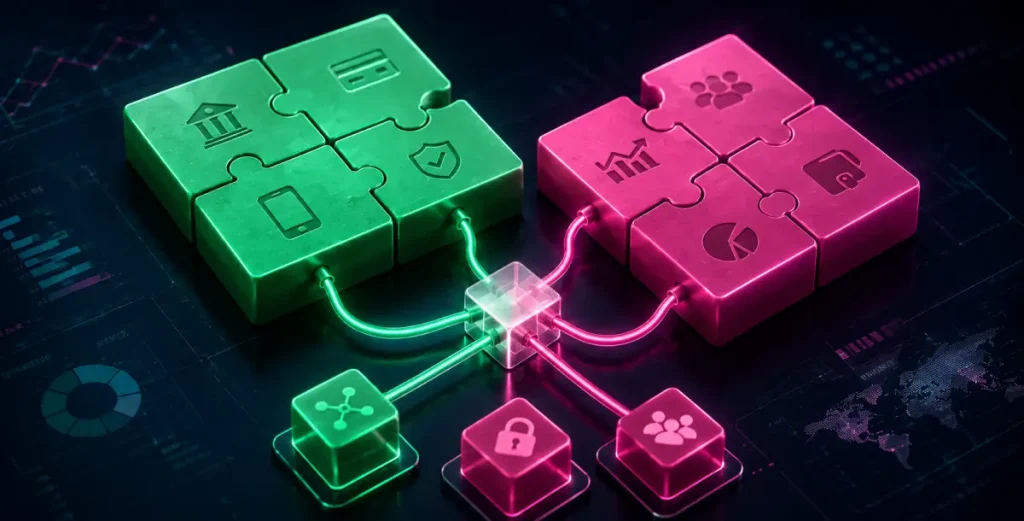
As the digital asset ecosystem matures, institutional participants, Web3 enterprises, and financial intermediaries face growing complexity in asset preservation, granular permissioning, and real-time risk mitigation. Legacy single-private-key architectures are insufficient for institutional operations, which demand high throughput, ironclad security, and collaborative workflow management. To address these challenges, enterprise infrastructure is shifting toward a hybrid paradigm: […]
Redefining Digital Asset Control through Non-Custodial MPC Architecture

The digital asset management landscape has long grappled with a core compromise: investors either surrender asset control to a third-party custodian—accepting counterparty, regulatory, and censorship risks—or they self-custody private keys, bearing the absolute risk of loss, theft, or operational error. Non-custodial Multi-Party Computation (MPC) wallets resolve this tension through an elegant cryptographic framework. By eliminating […]
A Comprehensive Guide to Non-Custodial Crypto Wallets: Why Users Are Increasingly Choosing Self-Custody

As the digital asset market matures, how organizations and individuals evaluate security and capital control is undergoing a massive shift. Historically, users defaulted to storing their assets on centralized platforms, leaving account management and private keys entirely in the hands of third parties. Today, the industry is waking up to a fundamental reality: true ownership […]