

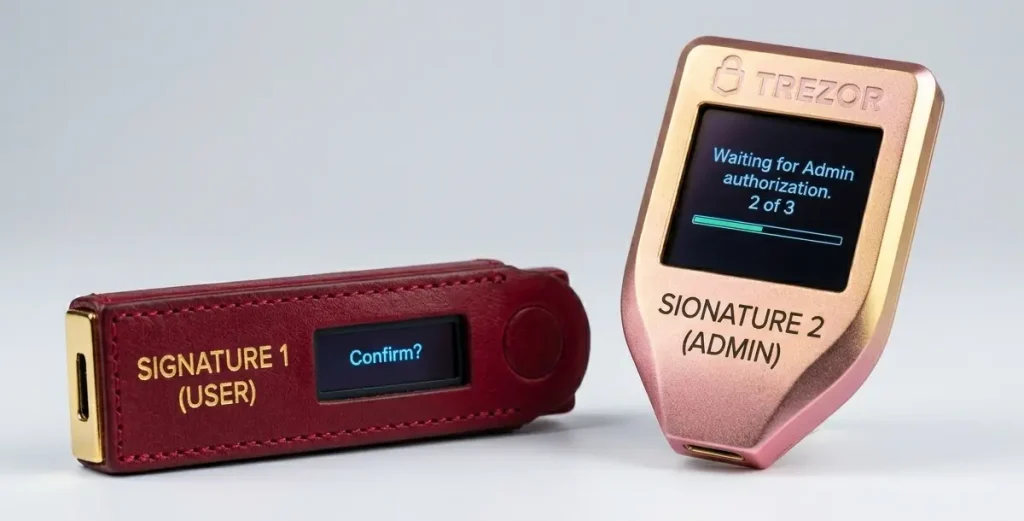
In the world of digital assets, the mantra is simple: “Not your keys, not your coins.” As the ecosystem matures, the methods for securing those keys have evolved from simple digital files to sophisticated, multi-layered security architectures. Whether you are a retail investor or an institutional player, understanding the spectrum of storage solutions is non-negotiable.
Hot vs. Cold Wallets
What is a Hot Wallet?
A Hot Wallet refers to any digital asset wallet that is consistently connected to the internet. These are designed for high-frequency use and immediate accessibility.
Common examples include:
- Web-based Wallets: Hosted on exchanges or browser extensions.
- Mobile Wallets: Apps installed on smartphones for on-the-go transactions.
- Desktop Wallets: Software installed directly on a computer.
The Trade-off: While hot wallets offer unparalleled liquidity and convenience for daily trading, their constant connectivity makes them more susceptible to malware, phishing, and remote hacking attempts.
What is a Cold Wallet?
A Cold Wallet is a storage solution that keeps private keys entirely offline. By removing the internet connection from the equation, cold wallets eliminate the primary vector for cyberattacks.
Common examples include:
- Hardware Wallets: Specialized physical devices (like USB-style sticks) that sign transactions in a secure, offline environment.
- Air-Gapped Computers: Computers that have never been, and will never be, connected to a network.
- Paper Wallets: Physical printouts of public and private keys.
Comparison at a Glance
| Feature | Hot Wallet | Cold Wallet |
| Connectivity | Always Online | Always Offline |
| Security Level | Moderate (vulnerable to online threats) | High (immune to remote attacks) |
| Ease of Use | High (instant transactions) | Lower (requires manual setup) |
| Ideal Use Case | Daily trading & small balances | Long-term “HODLing” & large sums |
The “Tiered Storage” Strategy
Most sophisticated investors and institutions do not choose one over the other; instead, they employ a Hybrid Storage Strategy:
- Hot Wallets are treated like a physical “wallet,” holding only enough capital for immediate operational needs or active trading.
- Cold Wallets act as the “high-security vault,” housing the vast majority of assets for long-term preservation.
This tiered approach strikes the perfect balance between operational efficiency 及 institutional-grade security.
Multi-Signature (Multi-Sig) Wallets
What is Multi-Sig?
In a standard wallet, one private key controls the funds. In a Multi-Sig setup, a transaction requires signatures from multiple independent keys before it can be executed on the blockchain.
A common configuration is a “2-of-3” Quorum:
- There are three total keys held by different parties (e.g., User, Co-signer, and Backup).
- Any two signatures are required to move funds.
How it Works in Practice
Multi-sig transforms asset management from a single-user action into a governed process. When a transaction is initiated, it stays in a “pending” state until the required number of co-signers approve it. This creates a digital version of a bank vault that requires two different keys held by two different people to open.
Why Use Multi-Sig?
- No Single Point of Failure: If one key is lost or stolen, your funds are still safe and accessible using the remaining keys.
- Institutional Governance: It allows organizations to enforce “checks and balances,” ensuring no single individual can move company funds unilaterally.
- Theft Prevention: Even if a hacker compromises a user’s computer, they cannot steal assets without access to the other distributed keys.
Building Your Security Stack
The evolution of crypto storage is moving toward a future where Cold Storage 及 Multi-Sig work together to create “unhackable” environments.
As the digital economy grows, the responsibility of asset protection rests on the architecture you choose. By combining the offline nature of cold wallets with the distributed authority of multi-sig, both individuals and institutions can participate in the blockchain revolution with total peace of mind.